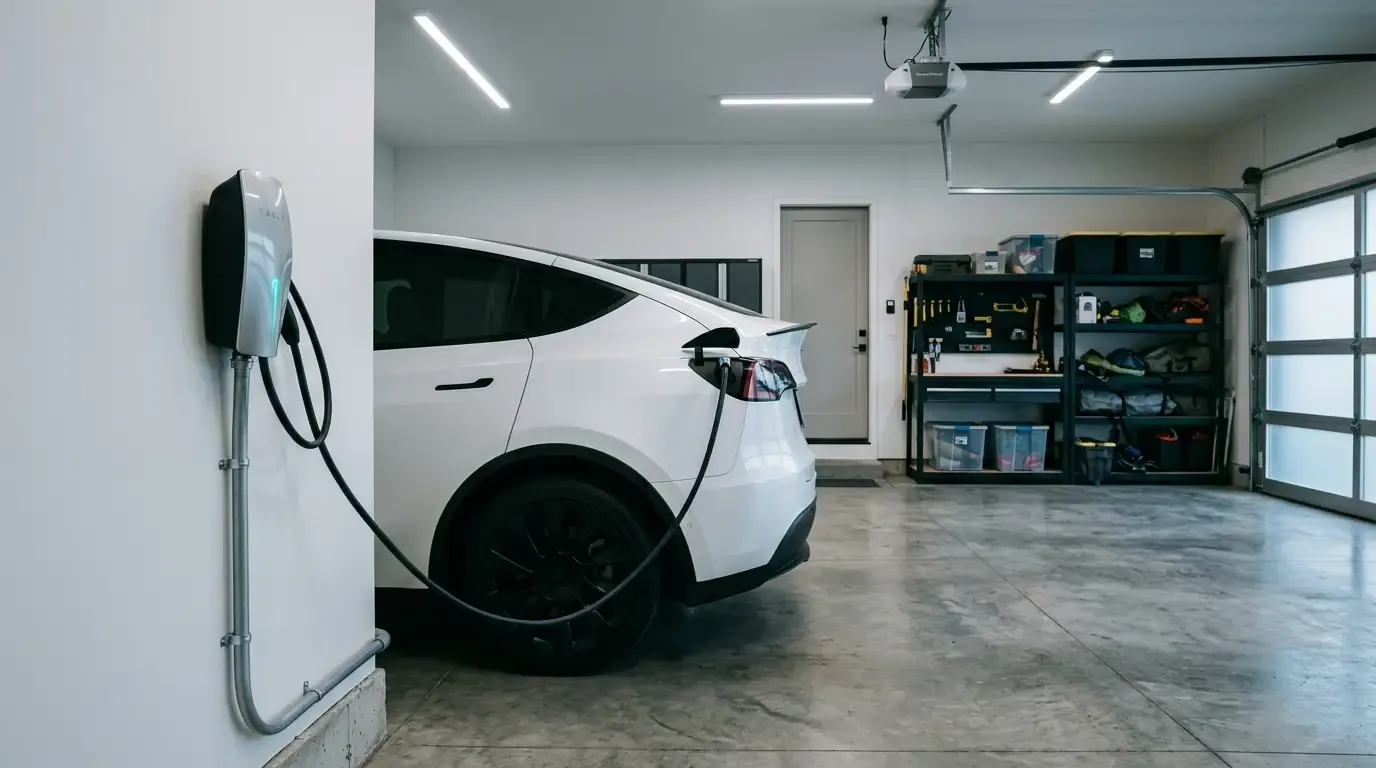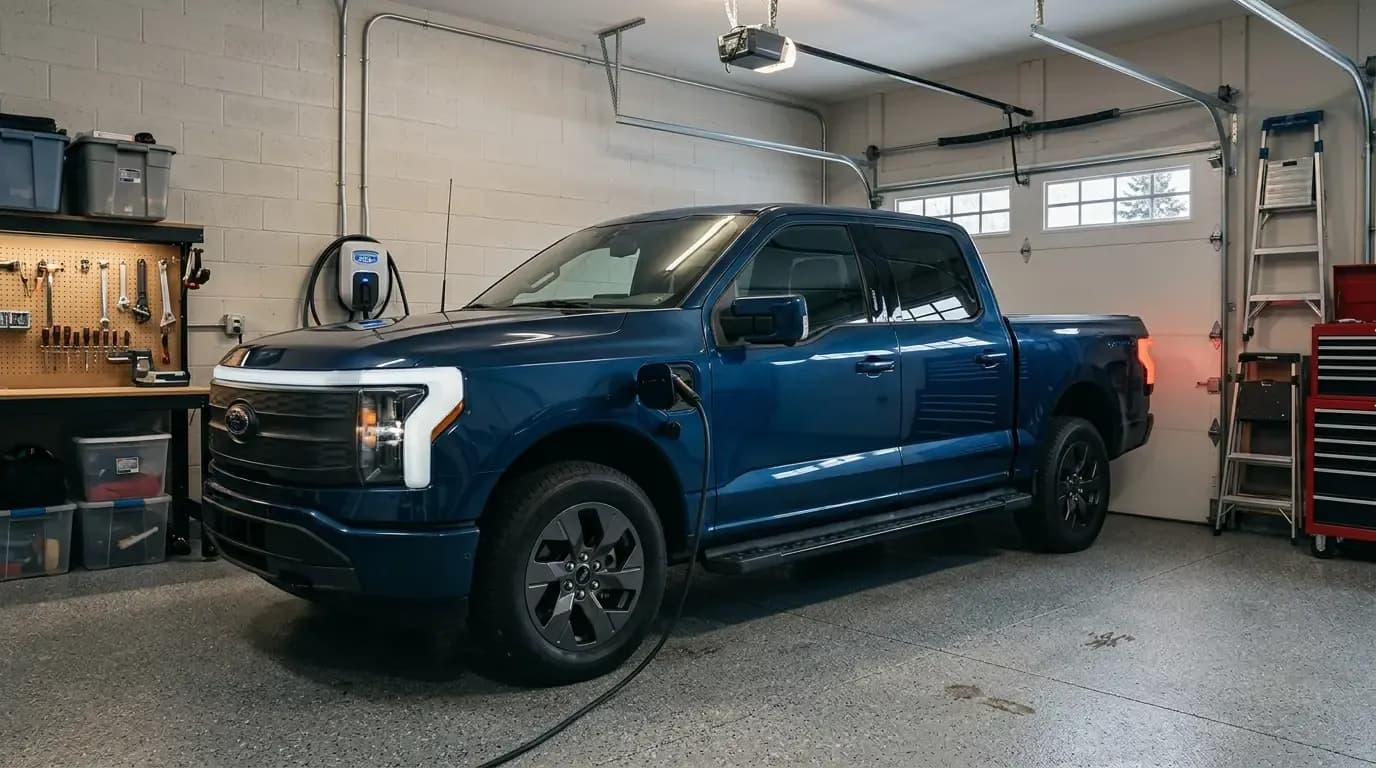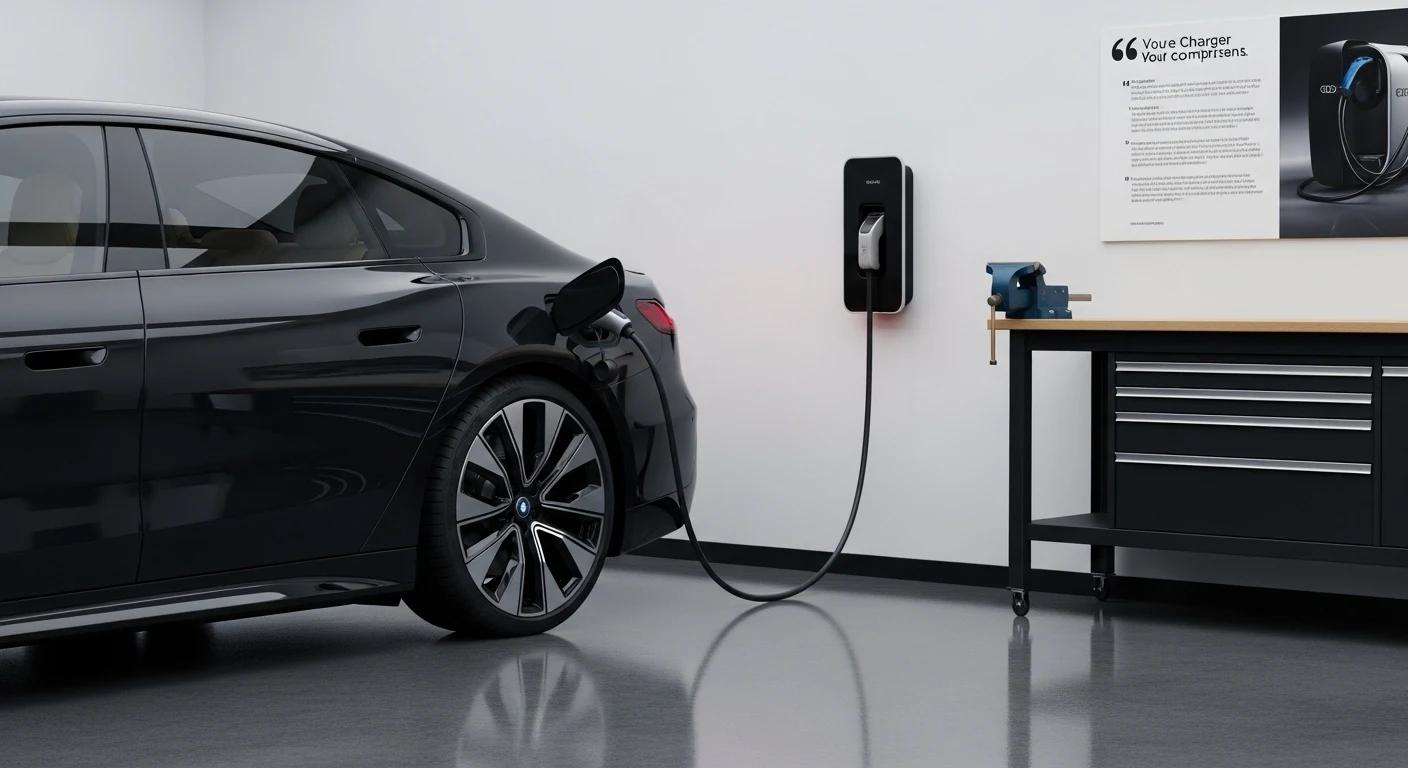
The onboard charger limits on popular European EVs
European EV models vary in their AC charging capability. The BMW i4 and i5 support up to 11 kW. The BMW iX supports up to 11 kW on the standard variant. The Mercedes EQS and EQE support 11 kW. The Audi Q8 e-tron supports 11 kW in standard US configuration. Most US residential installations top out at 11.5 kW because 22 kW requires three-phase supply not available in American homes.
Worth noting
BMW i4, i5, iX: 11 kW onboard AC charger — a 48-amp circuit on a 60-amp breaker is the practical match.
Mercedes EQS, EQE: 11 kW onboard AC charger — same 48-amp recommendation applies.
Audi Q8 e-tron: 11 kW standard in the US — confirm the US-market spec, which may differ from European brochures.
Why luxury buyers tend to overbuy charging equipment
Buyers of high-end vehicles often approach accessories with a premium preference. If a more expensive charger exists, it is assumed to provide proportionally more value. For home EV charging, that logic does not apply. The charger on the wall cannot exceed what the vehicle's onboard charger accepts. Spending more on a higher-rated wall unit does not improve daily charging performance for most European EVs in the US market.
Worth noting
A 48-amp charger delivers near-maximum performance for BMW and Mercedes EVs in most US homes.
An 80-amp charger rated for vehicles with higher onboard limits provides no benefit for an 11 kW car.
The circuit cost difference between a 48-amp and 80-amp installation can be several hundred dollars with no charging speed gain.
What a well-planned European EV installation looks like
The installation components that add real value for European EV owners are charger reliability, cable management, and clean mounting. A well-positioned Level 2 charger with an appropriate circuit, a professional conduit route, and a permit and inspection record is the right standard for any vehicle price point.
Worth noting
A 48-amp wall charger on a 60-amp dedicated circuit matches most European EV needs in the US.
Cable management that fits the charge port side of the vehicle reduces daily friction.
A permitted and inspected installation is documentation that protects the property at resale.
The 22 kW exception and why it rarely applies at home
Some European EV models support 22 kW three-phase AC charging. In Europe, where three-phase residential service is common, this is a meaningful upgrade. In the United States, residential power delivery is predominantly single-phase. Standard 240V single-phase service tops out around 11.5 kW for home EV charging. Even if the vehicle supports 22 kW, the home infrastructure for that level of charging is not available in standard US residential settings.
Worth noting
Three-phase residential service is not standard in US homes — 22 kW home charging is not achievable for most properties.
Confirm the vehicle's US-market onboard charger limit, which may differ from the European spec sheet.
If a vehicle purchase included the 22 kW option, the benefit is primarily for European travel or commercial-grade installations.
European EV home charging FAQ for Minnesota owners
Common questions from BMW, Mercedes, and Audi EV owners in Minnesota planning a home installation.
Worth noting
What charger do I actually need for a BMW i4 or iX? A 48-amp Level 2 charger on a 60-amp dedicated circuit is the right match for the 11 kW onboard charger.
Is a panel upgrade likely for my home? That depends on the home, not the vehicle brand. A load calculation will confirm whether the panel supports a 60-amp circuit.
Should I install an 80-amp setup to future-proof? Only if you expect to own a US-sold vehicle with an onboard charger above 11 kW. For most current European EV owners, the 48-amp setup is the right long-term choice.
Next step
Ready to plan your install?
Validate panel capacity, circuit path, and mounting location before installation day. Get a clear scope in writing.