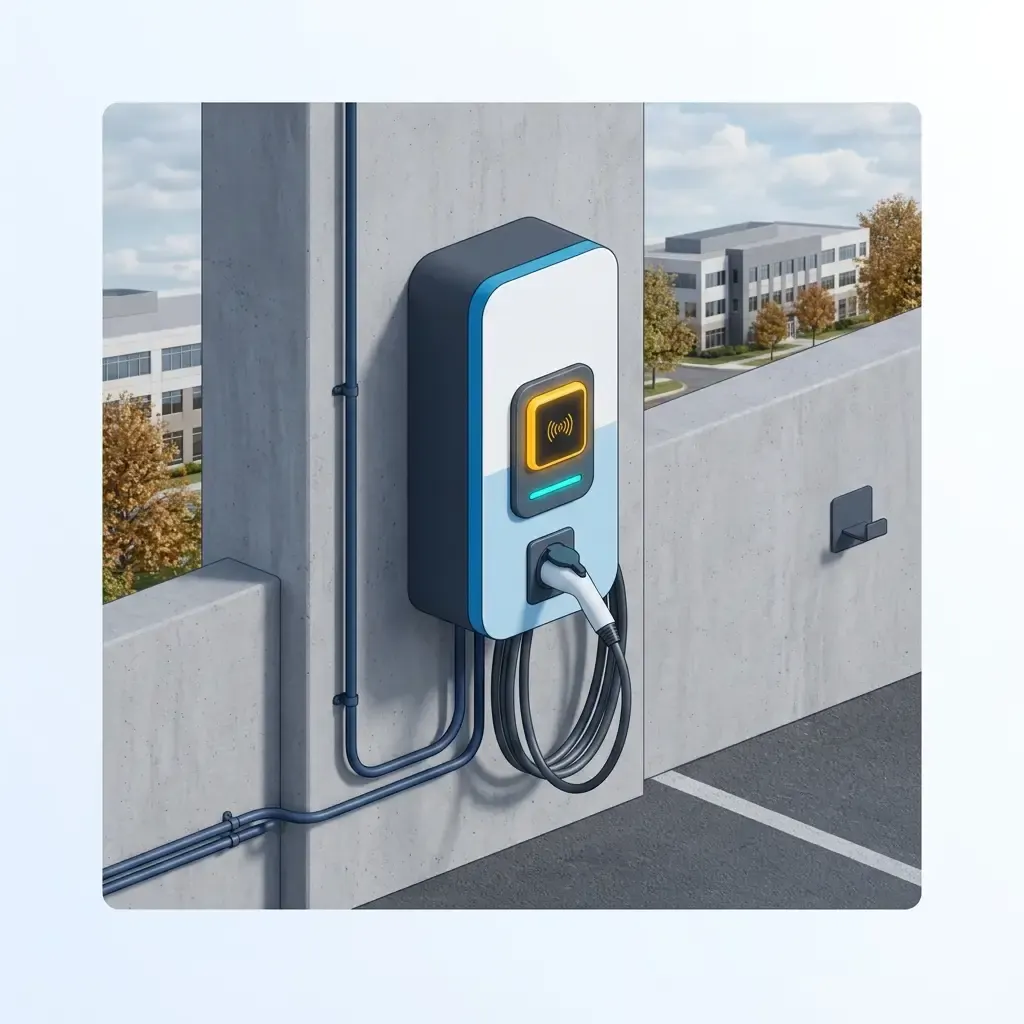
Deployed eight Level 2 stations across two parking decks for our 200-person office. Minnesota EV Charger Installation handled the load panel design, access control, and networked billing so employees are charged separately from the company account. Seamless rollout.
Employee charging programs
Workplace EV Charging in Minnesota. Built for Employees, Facilities, and Growth.
Deploy workplace charging with the right balance of convenience, access controls, and future-ready infrastructure planning.
Why homeowners choose us
- Employee amenity positioning — HR + facilities value
- Access and utilization controls — Policy support
- Phased site growth planning — Scalable design
5-Star Rated200+ reviews









Common problems, solved
EV charging issues we fix every day
Most EV charging problems come down to a handful of root causes. Here's how we diagnose and resolve each one.
About this service
Workplace EV Charging
This page is specifically for employee and office charging programs: staff access policy, HR and facilities coordination, utilization controls, and scalable workplace charging design.
Every project starts with a site walkthrough — we assess your panel capacity, confirm the best charger placement, and plan the wire run before any work begins. That upfront planning is what prevents the cut corners and rework that show up later as tripped breakers, undersized circuits, or a charger mounted where the cable barely reaches the car.
Charger selection matters as much as the installation itself. We match the charger level, amperage, and connector type to your vehicle, your daily mileage, and your panel's available capacity — not whatever happens to be in stock. A correctly sized circuit means faster overnight charging, no nuisance trips, and headroom for a second vehicle later.
Our installations are permitted, inspected, and fully documented. We pull the permit, schedule the inspection with your local Authority Having Jurisdiction, and hand you a copy of the completed work. That matters for insurance, resale, and any future warranty claim on the charger itself.
After installation we walk you through the charger app, load-management settings if applicable, and any utility rebate paperwork you qualify for. Most Minnesota utilities offer incentives for Level 2 home charging equipment — we make sure you don't leave money on the table.
Workplace charging projects in the Twin Cities metro typically require city or county electrical permits. We manage permitting end-to-end and coordinate with your facilities team on scheduling to minimize disruption.
What's included
- Parking and electrical capacity assessment
- Charger count, type, and placement by zone
- Access control setup — shared, reserved, or badge-gated
- Employee billing — reimbursement, subsidy, or pay-per-use
- Permit application and inspection coordination
- Networked Level 2 installation with load management
- Utilization dashboard setup for facilities teams
- Ongoing service and support options
Pricing snapshot
Small office deployment (2–4 ports)Must
2–4 networked Level 2 charging ports with load management
$10,000–$28,000
Campus-style rollout (5–16 ports)Optional
Multi-zone distribution, platform configuration, and access controls
$30,000–$100,000+
Large managed deployment with expansion infrastructureOptional
Reserved capacity for future growth, software-managed load balancing
$60,000+
How it works
A clear, step-by-step process from first contact to a commissioned commercial charging deployment.
 01
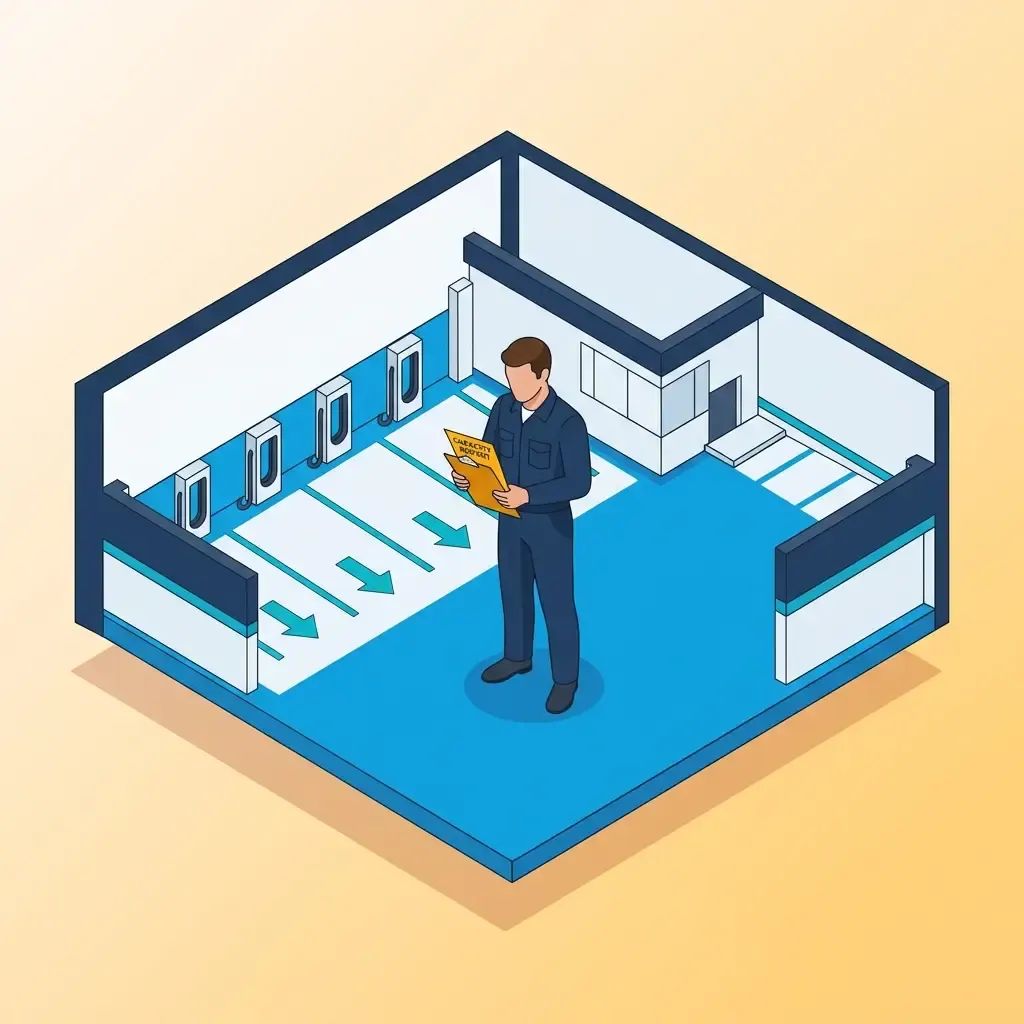
01Demand and capacity assessment
We assess employee EV adoption, parking layout, and electrical capacity — then model what charger deployment makes sense for today and three to five years from now.
 02
02Access policy and platform selection
We define access, billing, and reporting requirements with HR and facilities, then recommend the network platform that fits the program model.
 03
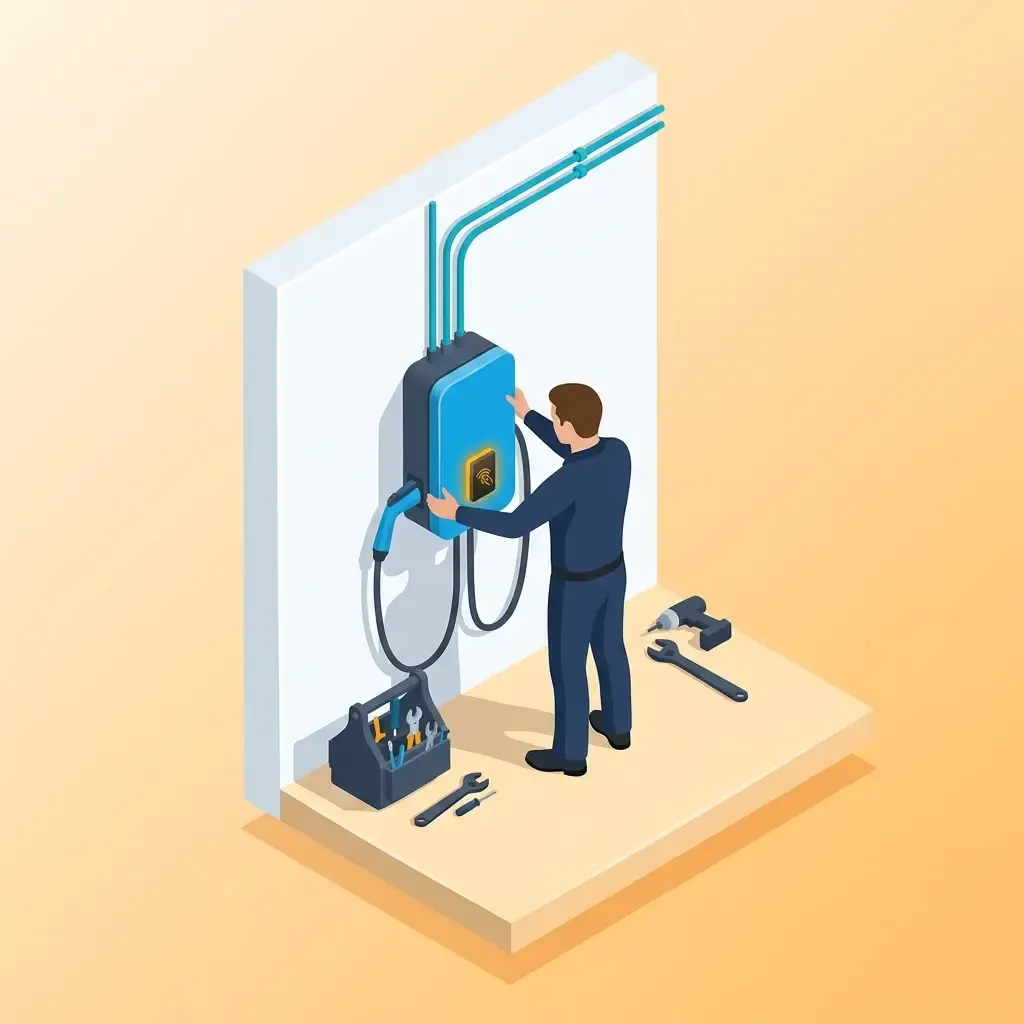
03Permit, install, and configure
We pull permits, install and wire the chargers, and fully configure the network platform — access controls, session billing, and utilization reporting — before handoff.
 04
04Commissioning and program launch
We walk the facilities team through the management dashboard, test every port, and confirm the program is running as designed before we leave the site.
Why Minnesota EV Charger Installation
Built for EV charging.
Not adapted to it.
We started Minnesota EV Charger Installation in 2010 because EV drivers deserved specialists, not electricians moonlighting between bathroom rewires. Fifteen years and 4,200+ installs later, that commitment hasn't changed — and neither has our focus.
- 15 years — EV charging only
- Permitted, inspected & documented
- Right-sized for your panel and your next EV
- Rebates handled for you
- Straight scope, firm price

Frequently asked questions
Answers designed to move high-intent buyers toward the next step with confidence.
The right starting point depends on how many employees currently drive EVs, how long they typically park, and how many parking spaces are in play. A good rule of thumb for early-stage deployments is one networked Level 2 charger for every eight to twelve EV-driving employees, assuming full-day parking and typical dwell times. We can help you survey or estimate current adoption, model growth, and recommend a first-phase count that does not over-build for today or under-build for next year.
Yes. Most commercial charger network platforms support per-session billing tied to kWh consumed, per-hour fees, or flat session fees. We configure the billing model to match whatever the employer wants: fully subsidized (free for employees), partially subsidized (employer pays first X kWh, employee pays above that), or full pay-per-use. The platform meters each session and handles payment processing, with reporting available by employee, cost center, or month.
This is the most common concern for workplace deployments in older office buildings, and the answer is usually better than expected. Dynamic load management software coordinates simultaneous charging sessions to keep total draw within available panel capacity — often allowing four to eight chargers on the same capacity that would only support two or three on dedicated static circuits. We assess your panel before recommending charger count, and we design the load management configuration to match what the service can actually handle.
Access fairness is a policy question as much as a technical one. Common approaches include a shared pool with first-come, first-served access enforced by session time limits; a reservation system through the charger network app; staggered rotation schedules managed by HR; or a priority tier (EV drivers with longer commutes, benefit program participants) with a general pool for overflow. We walk through the options before the install and configure the platform to enforce whatever model fits the company culture.
For most workplace programs, we recommend networked Level 2 units from ChargePoint, EVCS, Flo, Enel X JuiceBox, or Wallbox — each of which has strong fleet management dashboards, reliable hardware, and good support. The right choice depends on whether the employer wants a standalone account or integration with an existing facility management system, whether employees need a mobile app or a simpler RFID card process, and what the IT team requires for network connectivity. We present the tradeoffs clearly and let the facilities team make the call.
Yes. Xcel Energy offers commercial EV charging incentives for qualifying Minnesota businesses that can cover a portion of equipment and installation costs. Minnesota Power has a similar commercial program for its service territory. At the federal level, the Alternative Fuel Vehicle Refueling Property Credit (Form 8911) allows businesses to claim up to 30% of qualified charger installation costs as a tax credit. We document the project scope and equipment specifications in a format that supports these applications — the property owner or their tax advisor can take it from there.
Most small to mid-size workplace deployments (two to eight ports in a single parking zone) complete installation in one to three days once permits are in hand. Permitting in the Twin Cities metro typically takes two to four weeks depending on the municipality. Multi-zone campus projects or those requiring panel work or significant trenching run four to eight weeks total from permit submission to commissioned chargers. We provide a project schedule at proposal time so facilities can plan around the work.
What customers say about our Workplace EV Charging service
Real reviews from homeowners and businesses across the Twin Cities metro.
Our HR team added workplace charging as an employee benefit and asked me to manage the project. Minnesota EV Charger Installation phased it so we could start with four stations and expand without major rework. Three more stations added six months later with no surprises.
Hospital campus with 24-hour staff rotation. The team designed a managed charging system so peak demand stays within our utility contract limits at all hours. Zero demand charge overages since installation.
Small professional firm, six stations in an underground garage. Minnesota EV Charger Installation routed conduit cleanly through a finished ceiling and coordinated with building management on the shutdowns. No damage, no delays, no tenant complaints.
Plan your workplace charging rollout
Get a proposal tailored to parking layout, employee use patterns, and future expansion goals.