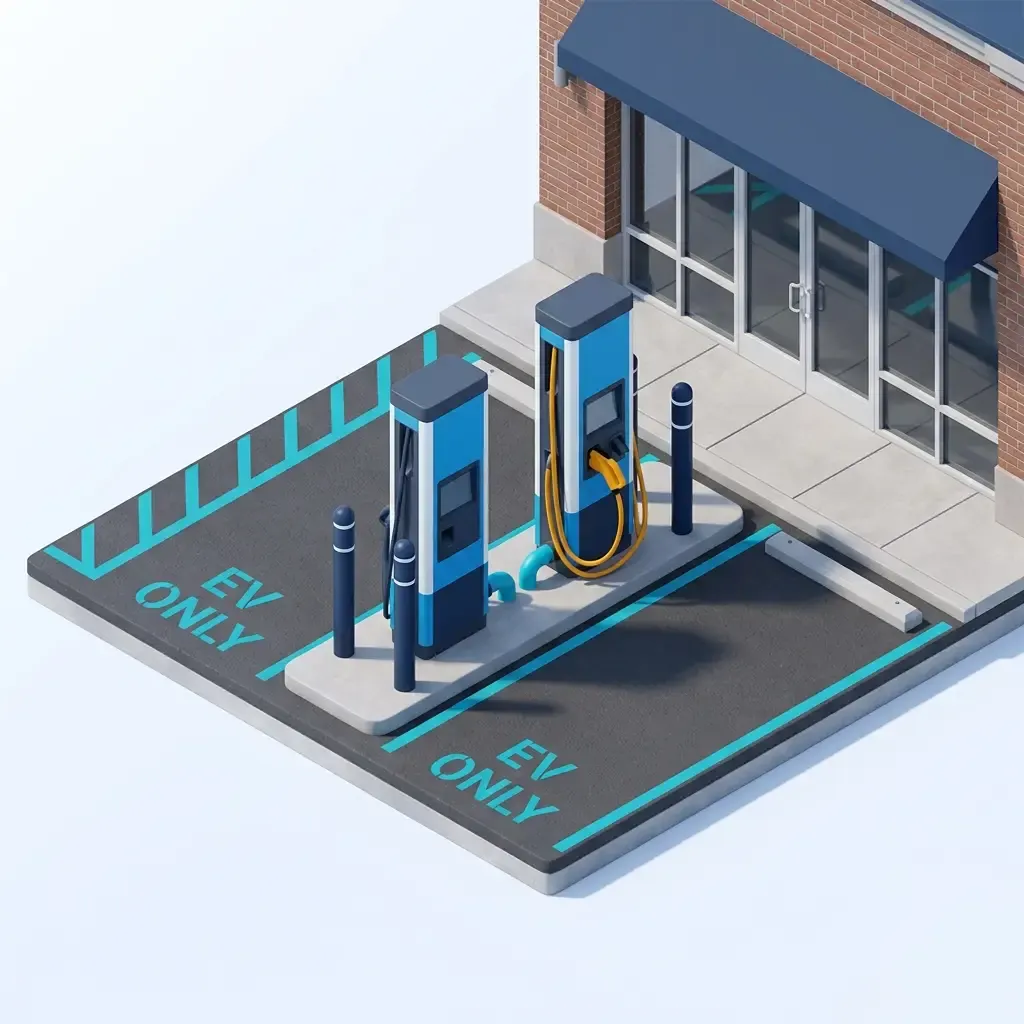
Strip mall with 12 customer-facing Level 2 stations networked for access and usage reporting. Minnesota EV Charger Installation handled the trenching, bollards, and utility coordination. Tenants have already commented on increased dwell time from EV drivers.
Parking lot charging infrastructure
Parking Lot EV Charging Station Installation in Minnesota. Durable, Scalable Outdoor Deployment.
Add EV charging to parking lots with site-aware design for visibility, traffic flow, trenching, power distribution, and future expansion.
Why homeowners choose us
- Traffic flow + charger visibility — Site-aware planning
- Outdoor infrastructure design — Durability focus
- Expansion-ready routing strategy — Growth path
5-Star Rated200+ reviews










Common problems, solved
EV charging issues we fix every day
Most EV charging problems come down to a handful of root causes. Here's how we diagnose and resolve each one.
About this service
Parking Lot EV Charging Station Installation
This page focuses on outdoor lot buildouts: trenching strategy, charger-island placement, traffic flow, bollards, weatherproofing, and expansion-ready distribution for surface parking deployments.
Every project starts with a site walkthrough — we assess your panel capacity, confirm the best charger placement, and plan the wire run before any work begins. That upfront planning is what prevents the cut corners and rework that show up later as tripped breakers, undersized circuits, or a charger mounted where the cable barely reaches the car.
Charger selection matters as much as the installation itself. We match the charger level, amperage, and connector type to your vehicle, your daily mileage, and your panel's available capacity — not whatever happens to be in stock. A correctly sized circuit means faster overnight charging, no nuisance trips, and headroom for a second vehicle later.
Our installations are permitted, inspected, and fully documented. We pull the permit, schedule the inspection with your local Authority Having Jurisdiction, and hand you a copy of the completed work. That matters for insurance, resale, and any future warranty claim on the charger itself.
After installation we walk you through the charger app, load-management settings if applicable, and any utility rebate paperwork you qualify for. Most Minnesota utilities offer incentives for Level 2 home charging equipment — we make sure you don't leave money on the table.
Parking lot charging projects in Minnesota require electrical permits and, in many cases, coordination with the property's existing electrical contractor or utility for distribution panel work. We manage the permit process and coordinate with any required third parties.
What's included
- Site walk — layout, traffic flow, and conduit routing assessment
- Trenching and conduit plan with expansion stubs
- Power distribution from panel to parking lot
- Charger type and count matched to customer dwell time
- Outdoor-rated hardware for Minnesota climate
- Bollards, signage, and surface restoration
- Network platform for customer billing and reporting
- Permit application and inspection coordination
Pricing snapshot
Small outdoor deployment (2-4 ports)Must
Trenching cost is the primary driver — proximity to panel matters significantly
$20,000-$60,000
Mid-size parking lot project (5-12 ports)Optional
Power distribution routing and lot layout complexity drive the wide range
$60,000-$175,000+
Large phased lot buildoutOptional
Usually includes sub-panel strategy, phased charger island expansion, and site staging
$175,000+
How it works
A clear, step-by-step process from first contact to a commissioned commercial charging deployment.
 01
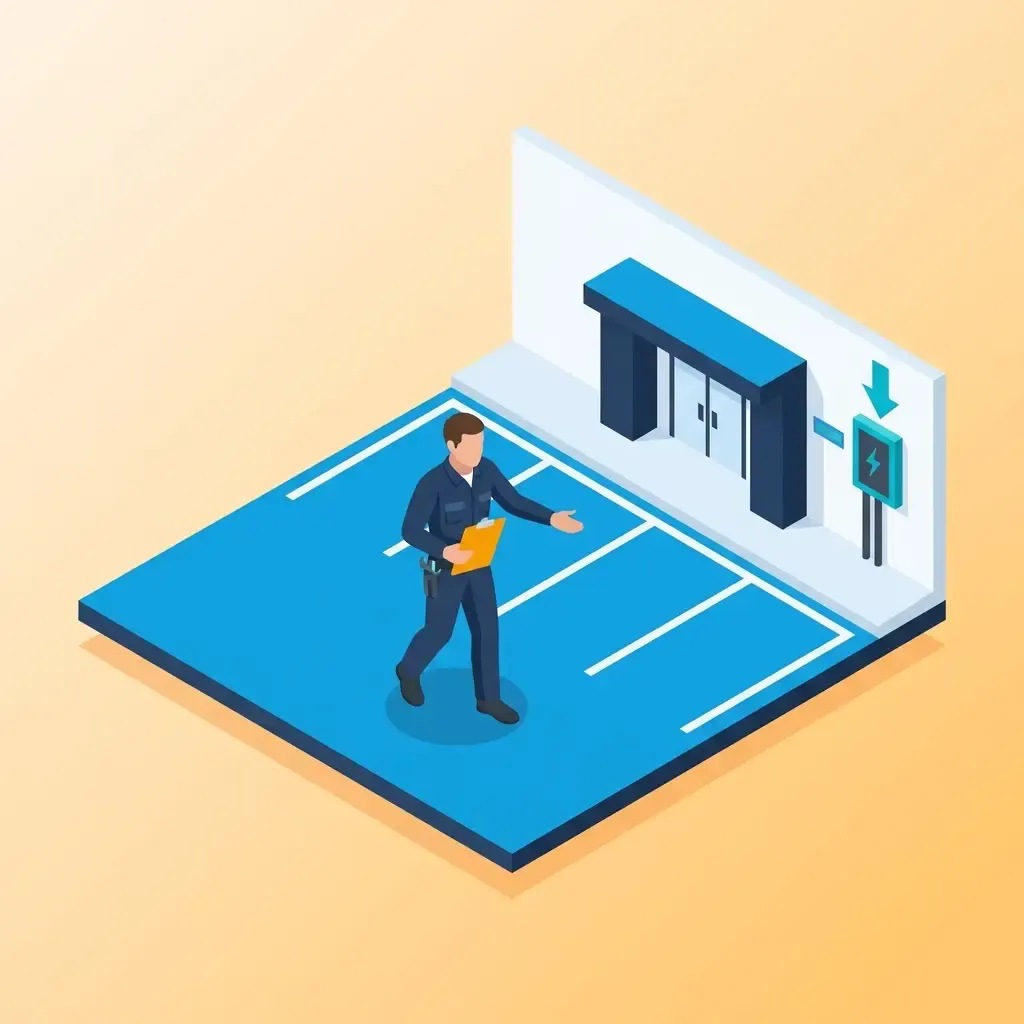
01Site walk and charger placement planning
We walk the parking lot to evaluate layout, traffic flow, panel proximity, and trenching feasibility — then recommend charger count, placement zones, and a conduit routing strategy.
 02
02Proposal with phasing options
We deliver a written proposal with itemized cost ranges, a conduit routing plan with future expansion stubs, and hardware and network platform options.
 03
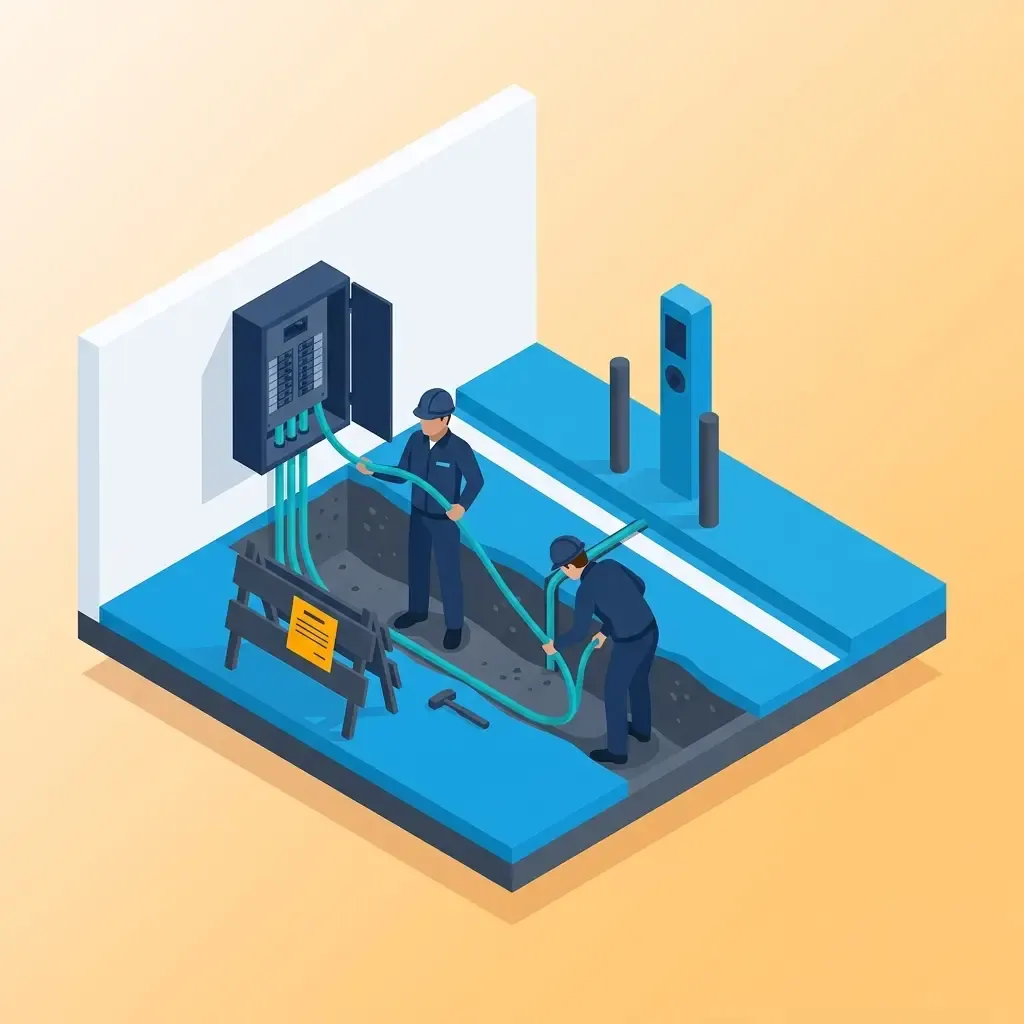
03Permit, trench, and install
We handle permit applications, manage trenching and surface restoration, install and wire the chargers, and configure the network platform.
 04
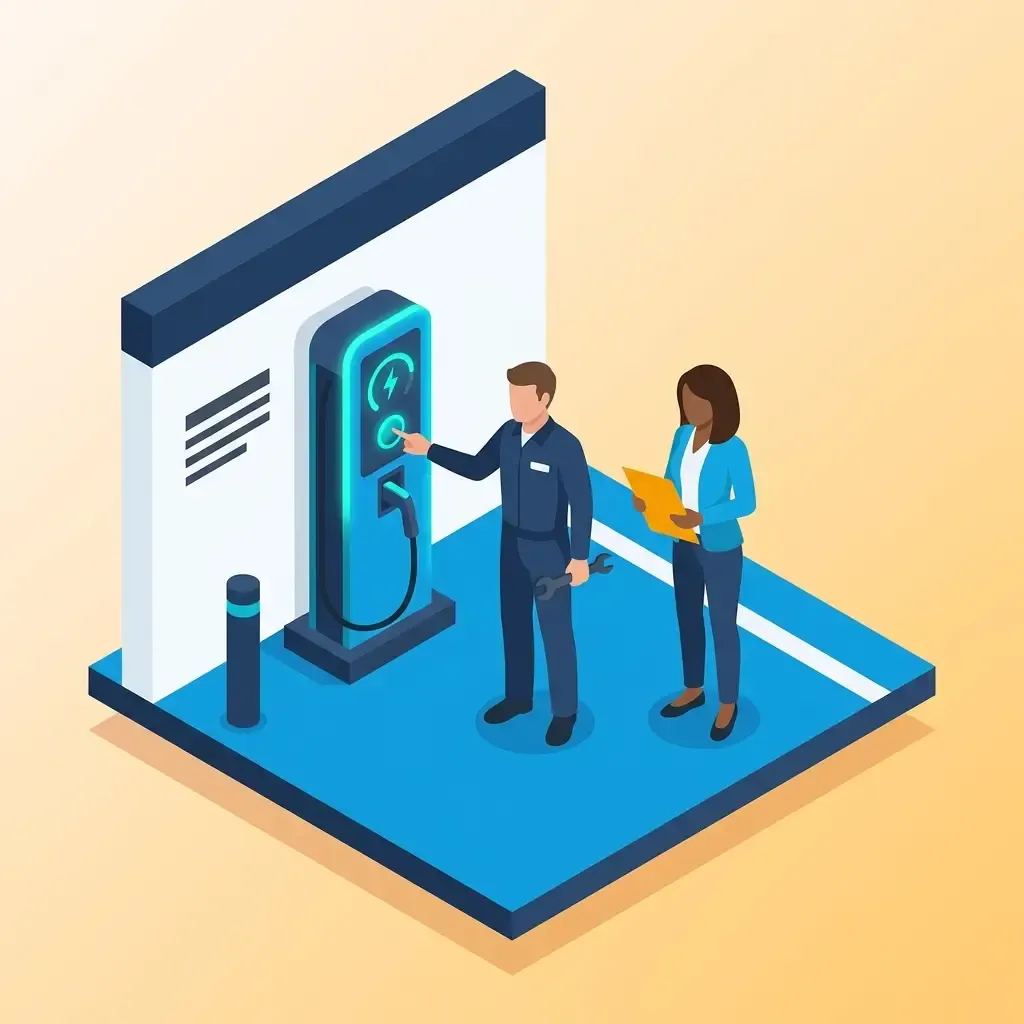
04Commissioning and go-live
We test every port, confirm network connectivity and billing is live, install signage and bollards, and walk the property manager through the dashboard before closing the project.
Why Minnesota EV Charger Installation
Built for EV charging.
Not adapted to it.
We started Minnesota EV Charger Installation in 2010 because EV drivers deserved specialists, not electricians moonlighting between bathroom rewires. Fifteen years and 4,200+ installs later, that commitment hasn't changed — and neither has our focus.
- 15 years — EV charging only
- Permitted, inspected & documented
- Right-sized for your panel and your next EV
- Rebates handled for you
- Straight scope, firm price

Frequently asked questions
Answers designed to move high-intent buyers toward the next step with confidence.
The range is wide because the biggest cost variable — trenching — depends heavily on the distance from the building electrical panel to the charger zone, the surface material (asphalt vs. concrete), and how many charger islands the conduit needs to serve. A two-charger deployment in a lot where the panel is close might run $20,000-$35,000. A four-charger deployment with a 300-foot conduit run across concrete might run $50,000-$80,000. We provide itemized cost ranges in the proposal, with the trenching and distribution costs broken out so the property owner can see what is driving the number.
Yes, and a well-planned first phase makes subsequent phases significantly cheaper. The key is routing conduit to future expansion zones during the initial trenching, when the surface is already cut and the crew is already on-site. Stubbing conduit to a second or third charger island adds a few thousand dollars to the first phase but eliminates a full trenching project — and the associated surface restoration cost — when those chargers are added later. We design every first phase as if phase two is coming.
For customer-facing parking lots where dwell times are two to four hours (retail, restaurant, hospitality), Level 2 chargers are typically the right tool. They add 20-40 miles of range per hour of parking, which is meaningful for a typical customer visit without requiring expensive DCFC infrastructure. For destination properties where customers park for 30-60 minutes and expect a meaningful charge (grocery, quick service, fuel replacement), DC fast chargers become relevant but carry significantly higher equipment and installation costs. We size the charger type to the realistic customer dwell window, not the maximum theoretical range delivery.
All of our outdoor installations use commercial charger hardware rated for the Minnesota temperature range, which extends to -30 degrees C or lower for most major commercial brands. Beyond hardware rating, the installation details matter: weathertight conduit entries sealed against moisture intrusion, NEMA 4-rated enclosures or better, and adequate ground clearance for snowplowing. We also recommend bollard protection on all parking lot chargers as standard — vehicle impact from a distracted driver is a far more common failure mode than weather.
Networked chargers in a customer lot can support tap-to-pay contactless payment, QR code sessions, or app-initiated billing — so the property owner chooses whether to offer charging as a free amenity (common for retail and hospitality as a traffic driver) or as a revenue-generating service. The network platform handles payment processing and remits revenue to the property owner. Most properties we work with start with free or low-cost charging to drive adoption and revisit pricing once utilization data shows demand is established.
Minnesota requires EV charging stalls to be designated with appropriate signage and pavement markings to be enforceable as EV-only spaces. Standard requirements include a sign at the stall or on the charger itself indicating EV charging use only, and pavement markings visible from the driving lane. We provide signage and marking specifications that meet current Minnesota requirements and advise on the stall marking strategy based on whether the property intends to actively enforce the designation or rely on signage as deterrence.
Yes. Xcel Energy and Minnesota Power offer commercial EV charging incentive programs that apply to qualifying parking lot deployments, including customer-facing and private commercial lots. The federal Alternative Fuel Vehicle Refueling Property Credit (Form 8911) also covers qualified commercial charger installations. We document the project scope and equipment in a format that supports utility rebate applications and provide the property owner with what they need to claim the federal credit. Incentives are identified at the proposal stage so they can be factored into the project budget.
What customers say about our Parking Lot EV Charging Station Installation service
Real reviews from homeowners and businesses across the Twin Cities metro.
Hotel surface lot with eight dual-port stations and two DC fast chargers. The phased design means we can add 10 more ports without touching the existing infrastructure. Guests notice and mention the amenity specifically in reviews.
Church parking lot, 20 stalls, tight budget. Minnesota EV Charger Installation designed a load-managed system that runs eight vehicles simultaneously from existing service without an upgrade. We came in under budget and ahead of schedule.
Grocery-anchored retail center. The stations are weatherproof, ADA-compliant, and the layout was planned so delivery traffic still has full access. Six months in with no service calls and the parking lot looks sharp.
Scope a parking lot charging project
Request a proposal with site-planning guidance, project options, and budget ranges for your lot.