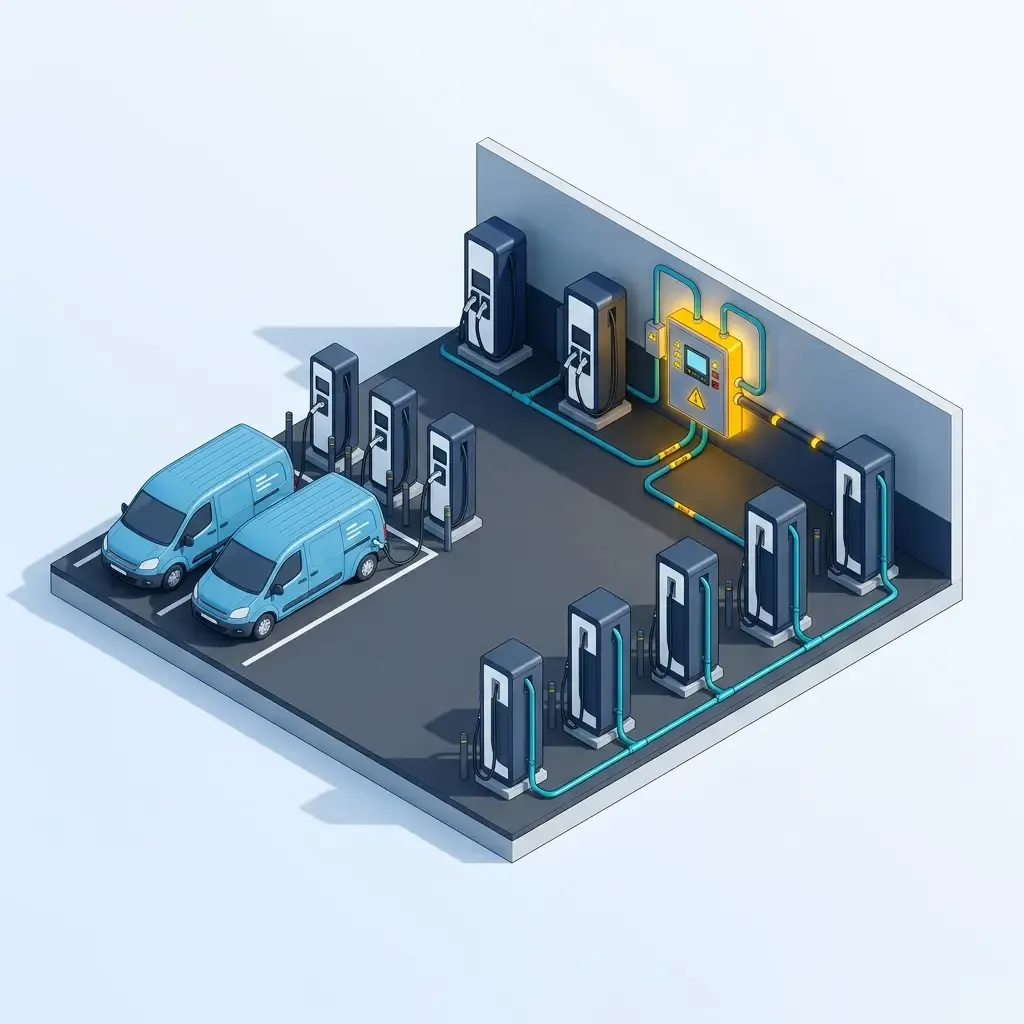
Fleet of 14 delivery vans transitioning to EV over 18 months. Minnesota EV Charger Installation designed a depot layout for our overnight rotation without overloading the building. Load management ensures we never pull peak demand charges.
Operational fleet charging
Fleet Charging Installation in Minnesota. Planned Around Uptime and Operations.
Plan charging for vehicles that have real route schedules, dwell windows, and uptime expectations—not just parking spaces.
Why homeowners choose us
- Route and dwell-time aware — Ops-first planning
- Phase by electrification timeline — Scalable rollout
- Capacity and depot readiness review — Infrastructure depth
5-Star Rated200+ reviews










Common problems, solved
EV charging issues we fix every day
Most EV charging problems come down to a handful of root causes. Here's how we diagnose and resolve each one.
About this service
Fleet Charging Installation
This page focuses on fleet depot operations: route schedules, dwell windows, uptime protection, telematics compatibility, and phased infrastructure planning for electrified vehicle fleets.
Every project starts with a site walkthrough — we assess your panel capacity, confirm the best charger placement, and plan the wire run before any work begins. That upfront planning is what prevents the cut corners and rework that show up later as tripped breakers, undersized circuits, or a charger mounted where the cable barely reaches the car.
Charger selection matters as much as the installation itself. We match the charger level, amperage, and connector type to your vehicle, your daily mileage, and your panel's available capacity — not whatever happens to be in stock. A correctly sized circuit means faster overnight charging, no nuisance trips, and headroom for a second vehicle later.
Our installations are permitted, inspected, and fully documented. We pull the permit, schedule the inspection with your local Authority Having Jurisdiction, and hand you a copy of the completed work. That matters for insurance, resale, and any future warranty claim on the charger itself.
After installation we walk you through the charger app, load-management settings if applicable, and any utility rebate paperwork you qualify for. Most Minnesota utilities offer incentives for Level 2 home charging equipment — we make sure you don't leave money on the table.
Fleet depot projects in Minnesota often involve coordination with the local utility for service upgrades. We manage that process alongside permitting and scheduling to keep the project moving without requiring fleet managers to navigate utility paperwork.
What's included
- Fleet schedule and dwell window analysis
- Depot electrical capacity evaluation
- Charger count and type recommendations
- Depot distribution layout and conduit routing
- Load management matched to depot hours and utility rates
- Utility coordination for service upgrades
- Permit application and inspection management
- Installation, commissioning, and telematics integration
Pricing snapshot
Initial fleet pilot (2–6 vehicles)Must
Small operational deployment with infrastructure reserve for expansion
$18,000–$55,000
Mid-size depot buildout (7–20 vehicles)Optional
Depends on service size, sitework, utility coordination, and vehicle count
$55,000–$180,000+
Large phased fleet infrastructure programOptional
Often tied to multi-year electrification timelines with phased capex
$180,000+
How it works
A clear, step-by-step process from first contact to a commissioned commercial charging deployment.
 01
01Fleet operations and depot assessment
We review vehicle schedules, dwell windows, route return times, and depot electrical infrastructure to understand the real charging demand before scoping any hardware.
 02
02Infrastructure and phasing plan
We define charger count, distribution layout, utility coordination needs, and a phased rollout path tied to the fleet electrification timeline.
 03
03Permit, utility, and installation
We manage permit applications, coordinate utility work if required, and install the infrastructure — distribution, conduit, chargers — according to the deployment plan.
 04
04Commissioning and operations handoff
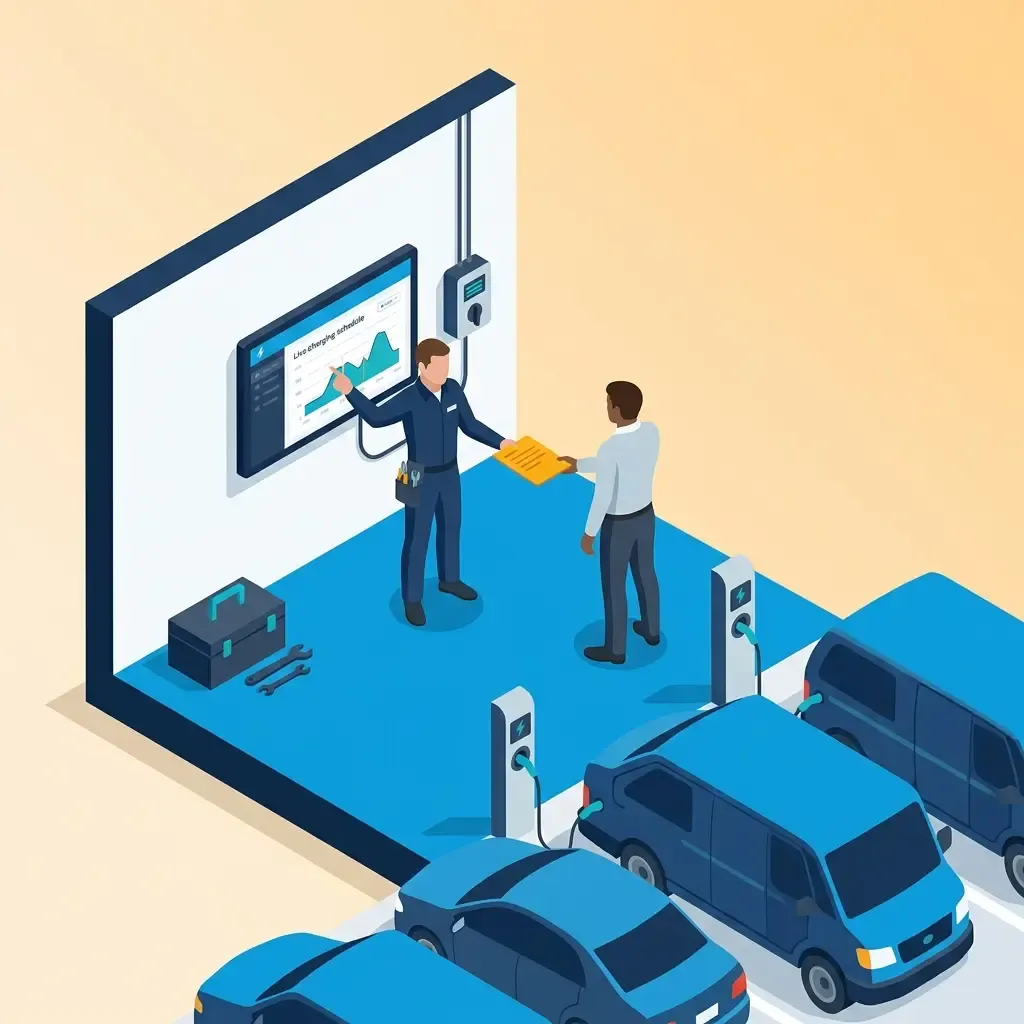
We configure load management, integrate with telematics if applicable, and walk fleet operations through the charging dashboard before the project closes.
Why Minnesota EV Charger Installation
Built for EV charging.
Not adapted to it.
We started Minnesota EV Charger Installation in 2010 because EV drivers deserved specialists, not electricians moonlighting between bathroom rewires. Fifteen years and 4,200+ installs later, that commitment hasn't changed — and neither has our focus.
- 15 years — EV charging only
- Permitted, inspected & documented
- Right-sized for your panel and your next EV
- Rebates handled for you
- Straight scope, firm price

Frequently asked questions
Answers designed to move high-intent buyers toward the next step with confidence.
Fleet charging is governed by operational uptime rather than employee convenience. Every vehicle needs to be charged and ready before its first dispatch of the day. That means charger count, session scheduling, and load management have to be designed around the specific return times and dwell windows of the fleet — not just parking space availability. We model charging demand against your route schedule before recommending a charger count, so missed-charge events are engineered out of the design rather than managed reactively.
Yes, and phased electrification is the norm for most fleet operators. The infrastructure strategy that supports phasing is to install the distribution backbone — conduit, panel capacity, load management platform — during the first phase, sized for the eventual full fleet. Then chargers are added as each wave of vehicles arrives. That approach means future phases are straightforward charger installations rather than disruptive electrical retrofits, and it typically reduces total project cost compared to doing each phase independently.
The answer depends heavily on vehicle count, charger level, and the dwell window. A 10-vehicle fleet with 8-hour overnight dwell times might need 60–120kW of charging capacity. A 30-vehicle fleet with 4-hour midday return windows might need 200–400kW or more, plus DC fast charging for shorter dwell situations. We calculate the capacity requirement from the operational data before recommending any electrical upgrades — and in many cases, off-peak scheduling and load management reduce the capacity requirement significantly.
This is a common situation in older industrial facilities. The path forward depends on what the existing service can support and when the full fleet conversion is planned. In many cases, a phased approach — charging only the first wave of vehicles within existing capacity while planning a utility service upgrade for the second wave — spreads the infrastructure capital cost across the electrification timeline. We coordinate with the local utility for service upgrade scoping and timeline as part of the project, so you have a realistic picture of what that costs and how long it takes.
Many commercial charger management platforms support API integration with fleet telematics systems including Samsara, Verizon Connect, Fleetio, and others. Integration depth varies by platform — some provide state-of-charge and charge completion data; others support automated session scheduling triggered by dispatch events. We evaluate integration compatibility during platform selection and recommend options that support the level of integration your operations team needs.
The primary ongoing costs are electricity and charger network subscription fees. Electricity costs depend on your utility rate structure, fleet size, and how well load management keeps charging off peak demand windows. Most commercial fleet operators on time-of-use rates see significant savings by scheduling overnight charging during off-peak hours. Network platform subscriptions for commercial fleet charger management typically run $15–$50 per port per month depending on the platform and feature set. We document expected operating costs as part of the proposal so the fleet budget can plan accordingly.
Yes. When a fleet deployment requires a utility service upgrade — transformer capacity increase, new service entrance, or metered subpanel — we coordinate directly with the utility during the project. That includes submitting the interconnect application, providing the load study documentation the utility requires, and tracking the utility work schedule so it aligns with the installation timeline. Utility work timelines in Minnesota vary from six to twenty weeks depending on the scope and the utility, and we factor that into the project schedule from the start.
What customers say about our Fleet Charging Installation service
Real reviews from homeowners and businesses across the Twin Cities metro.
Municipal fleet with strict procurement and permit requirements. They navigated city approvals, coordinated a utility demand response program, and hit the deadline. Documentation was delivered in the exact format our records department required.
Older depot with limited panel capacity. They used smart load sharing for 10 vehicles charging 6 at a time without a full service upgrade. Saved roughly $40,000 compared to the upgrade-first quote we got from another contractor.
Healthcare fleet where timing and reliability are everything. They showed up when promised at every stage. The depot handles our nursing home shuttle rotation without issue and staff adapted quickly because the system is simple.
Request a fleet charging proposal
Share vehicle counts, operating windows, and depot conditions for a rollout strategy built around real fleet operations.